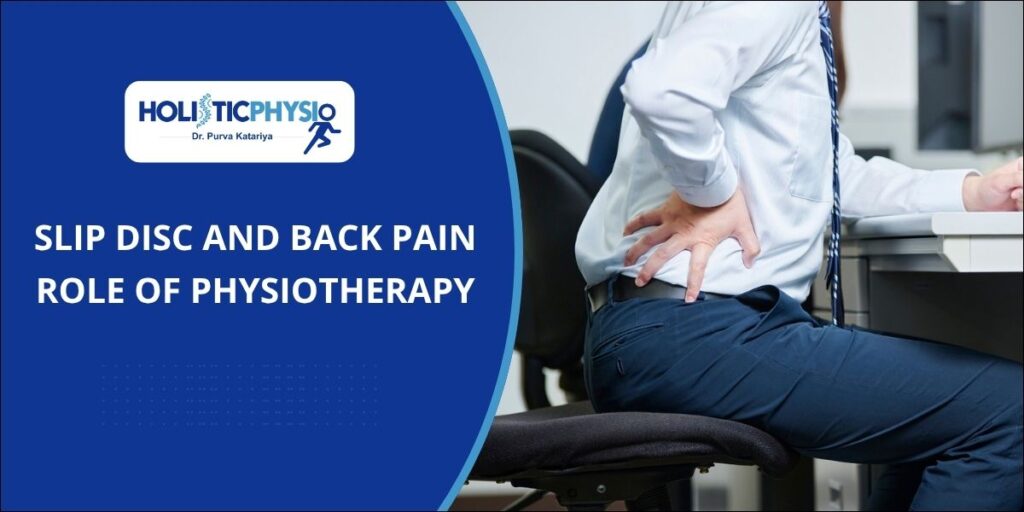
Back pain is a common problem that can affect people of all ages. It may start after lifting something heavy, sitting for long hours, exercising incorrectly, or even without an obvious reason. One condition that can cause significant back pain is a slip disc, also known as a herniated or bulging disc.
A slip disc can cause pain in the lower back and, in some cases, pain that travels down the buttock and leg. While the symptoms can sometimes be uncomfortable or limiting, physiotherapy can play an important role in managing pain, improving movement, and helping a person return to daily activities.
What Is a Slip Disc?
The spine is made up of a series of bones called vertebrae. Between these bones are soft, cushion-like structures called discs. These discs absorb shock and allow the spine to move comfortably.
Sometimes, the outer layer of a disc becomes weak or damaged, allowing the inner material to bulge or move outward. This is commonly called a slip disc or herniated disc.
A slipped or herniated disc may irritate nearby nerves. Depending on its location, it can cause symptoms such as:
- Lower back pain
- Pain spreading to the buttocks or legs
- Tingling or numbness
- Muscle weakness
- Stiffness or difficulty moving
- Increased pain while sitting, bending, coughing, or sneezing
Not everyone with a disc problem experiences severe symptoms. The treatment approach depends on the person’s symptoms, physical condition, and clinical assessment.
How Does a Slip Disc Cause Back Pain?
When a disc bulges or herniates, it can irritate surrounding tissues or put pressure on a nearby nerve. This may result in pain and other symptoms.
For example, a disc problem in the lower back can sometimes irritate the sciatic nerve, causing pain that travels from the lower back into the buttock and leg. This condition is commonly associated with sciatica.
However, back pain is not always caused by a slip disc. Muscle strain, poor posture, spinal arthritis, and other conditions can also contribute to back pain. Therefore, proper assessment is important before starting any treatment or exercise programme.
Role of Physiotherapy in Slip Disc and Back Pain
Physiotherapy is an important part of non-surgical management for many people with back pain and disc-related problems. The goal is not simply to reduce pain but also to improve mobility, strength, flexibility, and confidence in movement.
A physiotherapist may first assess your posture, spinal movement, muscle strength, flexibility, walking pattern, and symptoms. Based on this assessment, an individualized treatment plan can be created.
1. Pain Management
During the early stage of back pain, physiotherapy may focus on reducing pain and improving comfortable movement. Depending on the condition, the physiotherapist may use manual therapy, therapeutic exercises, positioning techniques, or other appropriate treatment methods.
The treatment is adjusted according to the individual’s symptoms and response.
2. Improving Spinal Mobility
Back pain can make a person afraid to move. Avoiding movement completely, however, may lead to stiffness and reduced physical activity.
Appropriate physiotherapy exercises can help gradually restore spinal mobility and make everyday movements more comfortable.
3. Strengthening Core Muscles
The muscles around the abdomen, pelvis, hips, and lower back help support the spine. Weakness or poor coordination in these muscles may affect movement and spinal stability.
A physiotherapist may recommend core strengthening exercises based on the person’s condition. These exercises are introduced gradually and progressed as strength improves.
4. Improving Posture and Movement Habits
Long periods of sitting, incorrect lifting techniques, and poor workplace ergonomics can contribute to recurring back discomfort. Physiotherapy can help you understand how to sit, stand, bend, lift, and move more safely. Small changes in daily habits can be useful in reducing unnecessary strain on the back.
5. Preventing Recurring Back Pain
Pain relief is only one part of recovery. Once symptoms improve, continuing with appropriate exercises can help maintain strength and flexibility. A physiotherapist can create a home exercise programme that fits your daily routine. Regular exercise, maintaining a healthy body weight, staying active, and using proper lifting techniques may also support long-term back health.
Can Physiotherapy Help Avoid Surgery?
Many people with disc-related back pain improve with conservative treatment, including physiotherapy, activity modification, and appropriate medical care. However, the right treatment depends on the severity and cause of the symptoms.
Physiotherapy should not be considered a replacement for medical evaluation when symptoms are severe or unusual. In some situations, further medical assessment or surgical treatment may be necessary.
If back pain is accompanied by significant or worsening weakness, loss of bladder or bowel control, numbness around the inner thighs or genital area, or other serious symptoms, prompt medical attention is important.
When Should You See a Physiotherapist?
You may consider a physiotherapy assessment if your back pain is affecting your daily activities, sitting, walking, sleeping, exercising, or working.
Early assessment can help identify movement-related problems and provide appropriate guidance rather than relying on prolonged rest or self-treatment.
Physiotherapy for Back Pain in Mira Bhayandar
If you are looking for physiotherapy for back pain in Mira Bhayandar, Dr. Purva Katariya provides physiotherapy care focused on understanding the underlying movement and functional problems associated with back pain. Treatment may include personalized therapeutic exercises, mobility training, strengthening, posture guidance, and other physiotherapy techniques based on individual needs. For people experiencing back pain, sciatica, or discomfort associated with disc-related problems, a proper physiotherapy assessment can help determine a suitable treatment approach and support a gradual return to normal daily activities. Dr. Purva Katariya aims to provide patient-focused physiotherapy for back pain in Mira Bhayandar with an emphasis on safe movement, recovery, and long-term back care.
FAQs
1. Can physiotherapy help with a slip disc?
Yes. Physiotherapy can help manage pain, improve movement, strengthen supporting muscles, and improve daily function.
2. Is walking good for slip disc pain?
Gentle walking may be helpful for many people, but the appropriate level of activity depends on symptoms and individual condition.
3. How long does physiotherapy take for back pain?
Recovery time varies depending on the cause, severity of symptoms, overall health, and consistency with treatment and exercises.
4. Can a slip disc heal without surgery?
Many disc-related problems can improve with conservative treatment, but some cases require further medical evaluation or surgery.
5. Should I exercise during slip disc pain?
Appropriate exercises can be beneficial, but exercises should be selected according to your symptoms and physical assessment.