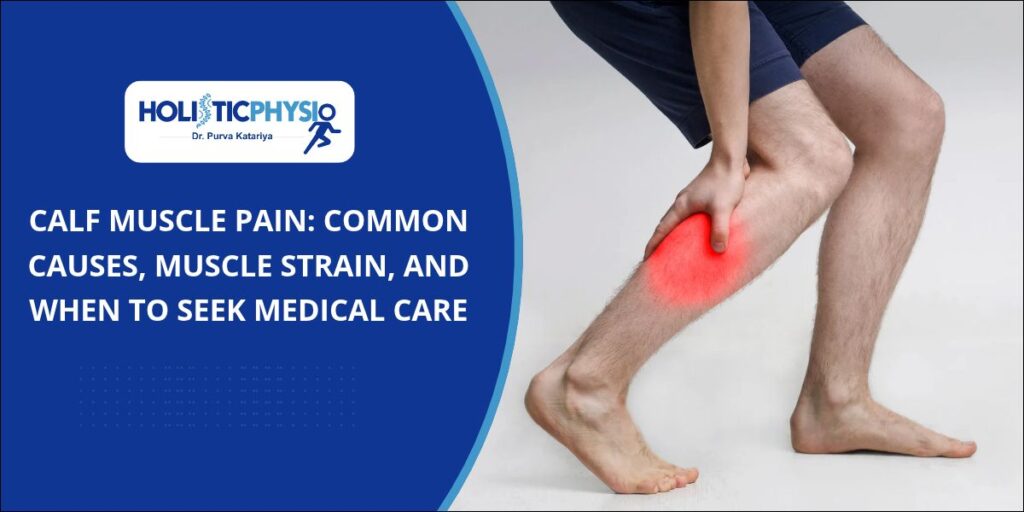
Calf muscle pain is one of the most common leg complaints people bring to a physiotherapist. It can start suddenly during a game of cricket, build up slowly after weeks of long walks, or wake you at night as a sharp cramp. Most calf pain comes from the muscles themselves and settles with sensible care. Sometimes, though, pain in the calf points to a problem that needs a doctor quickly.
This guide explains the common causes of calf muscle pain, how a calf strain feels, what you can do at home, and the warning signs that mean you should seek medical care.
Where Is the Calf and Why Does It Hurt?
The calf sits at the back of the lower leg. It is made up mainly of two muscles: the gastrocnemius, the larger muscle you can see, and the soleus, which lies deeper. Both join the Achilles tendon at the heel. They push you forward every time you walk, climb stairs, run or rise onto your toes.
Pain usually appears when these muscles are asked to do more than they are ready for, or when something affects the blood vessels or nerves in the leg.
Common Causes of Calf Muscle Pain
1. Calf Muscle Strain
A calf strain (often called a pulled calf) happens when muscle fibres are overstretched or torn. It is common in running, badminton, football and tennis, especially during a sudden push off or change of direction. People in their 40s and 50s who return to sport after a break are often affected.
2. Muscle Cramps
A cramp is a sudden, painful tightening of the calf that can last a few seconds to several minutes. Cramps are common at night, after heavy exercise, in hot weather and during pregnancy. Dehydration, tiredness and some medicines can make them more likely.
3. Overuse and Muscle Tightness
Long hours of standing, a sudden increase in walking or running, or a change in footwear can leave the calf tight and sore. This aching usually feels worse after activity and eases with rest.
4. Achilles Tendon Problems
Pain lower down, close to the heel, may come from the Achilles tendon rather than the muscle. Stiffness that is worse first thing in the morning is a typical sign.
5. Problems Not Related to the Muscle
Some causes of calf pain have nothing to do with the muscle:
- Deep vein thrombosis (DVT): a blood clot in a deep vein of the leg. It needs urgent medical attention.
- Sciatica: irritation of a nerve in the lower back can send pain, tingling or numbness down into the calf.
- Reduced blood flow: calf pain that comes on with walking and eases with rest can be a sign of narrowed arteries, which is more common in people who smoke or have diabetes.
How Does a Calf Muscle Strain Feel?
A calf strain usually feels like a sudden sharp pain or a “pull” at the back of the lower leg during activity. Some people describe it as being hit or kicked in the calf.
Other common signs include:
- Pain when rising onto your toes or walking uphill
- Tenderness when you press on the muscle
- Swelling or bruising that may appear a day or two later
- Tightness and difficulty walking normally
Strains range from mild, where you can walk with some discomfort, to severe tears that make walking or standing on tiptoe very hard. Only an assessment can tell how much the muscle is affected.
What Can You Do at Home for Calf Pain?
For a mild strain or tight, aching calf, these simple steps may help in the first few days:
- Relative rest: avoid the activity that caused the pain, but keep gently moving within comfort.
- Ice: wrap an ice pack in a thin towel and apply it for 15 to 20 minutes at a time during the first 48 hours.
- Elevation: rest with the leg raised to help reduce swelling.
- Gentle movement: once the sharp pain settles, slowly move the ankle up and down to keep the calf from stiffening.
- Supportive footwear: avoid walking barefoot on hard floors while the calf is sore.
For a cramp, gently pull your toes towards you or walk around until it eases.
Avoid strong stretching, deep massage or returning to sport while a fresh strain is still painful.
When Should You Seek Medical Care for Calf Pain?
Seek urgent medical help if calf pain comes with swelling in one leg, warmth, redness or darkened skin, especially if you also feel breathless or have chest pain. These can be signs of a blood clot. The NHS page on deep vein thrombosis lists these warning signs in more detail.
You should also see a doctor or physiotherapist promptly if:
- You heard a pop and cannot walk or stand on tiptoe
- The pain followed a fall or direct injury
- Pain, numbness or tingling spreads from your back down the leg
- Calf pain keeps returning every time you walk a certain distance
- The leg looks pale, feels cold, or the pain is severe at rest
- Pain has not improved after one to two weeks of home care
Recent surgery, long travel, pregnancy and bed rest raise the risk of a clot, so take one-sided calf swelling seriously.
How Can Physiotherapy Help with Calf Muscle Pain?
Physiotherapy starts with an assessment of how the pain began, the muscle and tendon, your walking, strength and ankle movement. If anything suggests a clot, nerve problem or serious tear, you will be referred to a doctor for further tests.
Depending on what the assessment shows, treatment may include:
- Graded strengthening: calf raises and other exercises that load the muscle step by step
- Mobility work: gentle stretching and ankle movement once healing allows
- Manual therapy: hands-on techniques to ease muscle tightness
- Taping: kinesio taping may be used for short-term support in some cases
- Return to activity planning: a gradual plan for walking, running or sport so the calf is not overloaded too soon
- Footwear and training advice: looking at shoes, surfaces and training load
Recovery time varies from person to person. If you play sport, a sports injury assessment can help plan a safer return.
Physiotherapy for Calf Pain in Mira Bhayandar
If calf pain is affecting your walking, work or sport, an assessment can help find out what is behind it. At Holistic Physio in Bhayandar West, Dr. Purva Katariya (BPT, MPT Orthopaedics) assesses muscle and sports-related problems and plans treatment based on individual needs, which may include exercise therapy, manual therapy and taping.
Holistic Physio Shop No 9, Geeta Park Building, Temba Rd, Chandmal Nagar, Bhayandar West, Mira Bhayandar, Maharashtra 401101 Call: +91 85510 05533
You can also contact the clinic to book an appointment. If you have signs of a blood clot, please go to a hospital or see a doctor straight away.
FAQs
1. How long does a calf strain take to heal?
A mild calf strain often improves within two to three weeks, while moderate strains can take several weeks. A severe tear may take longer and sometimes needs medical review. Healing time varies with age, activity level and how the calf is managed early on.
2. Should I stretch a pulled calf muscle?
Avoid strong stretching in the first few days after a strain, as it can irritate healing fibres. Gentle ankle movement within comfort is usually fine. A physiotherapist can advise when to begin stretching and strengthening based on your symptoms.
3. Is walking good for calf pain?
Short, comfortable walks are often helpful for mild calf tightness or a minor strain. If walking causes sharp pain, limping or swelling, reduce it and get the calf assessed. Pain that comes on with walking and stops with rest should be checked by a doctor.
4. How do I know if calf pain is a blood clot?
A clot is more likely if one calf is swollen, warm, red or tender, and the pain is throbbing rather than linked to movement. You cannot confirm a clot at home. If you notice these signs, especially after surgery or long travel, see a doctor urgently.
5. Why do I get calf cramps at night?
Night cramps are common and often linked to tired muscles, dehydration, long periods of standing or certain medicines. Gentle stretching before bed may help. Frequent or severe cramps are worth discussing with a doctor.